

Dog Nail Trimming: How Often and Why It Matters
Overgrown nails change how a dog stands and walks. Here is how often to trim, what happens when nails are left too long, and why some dogs fight nail trims.
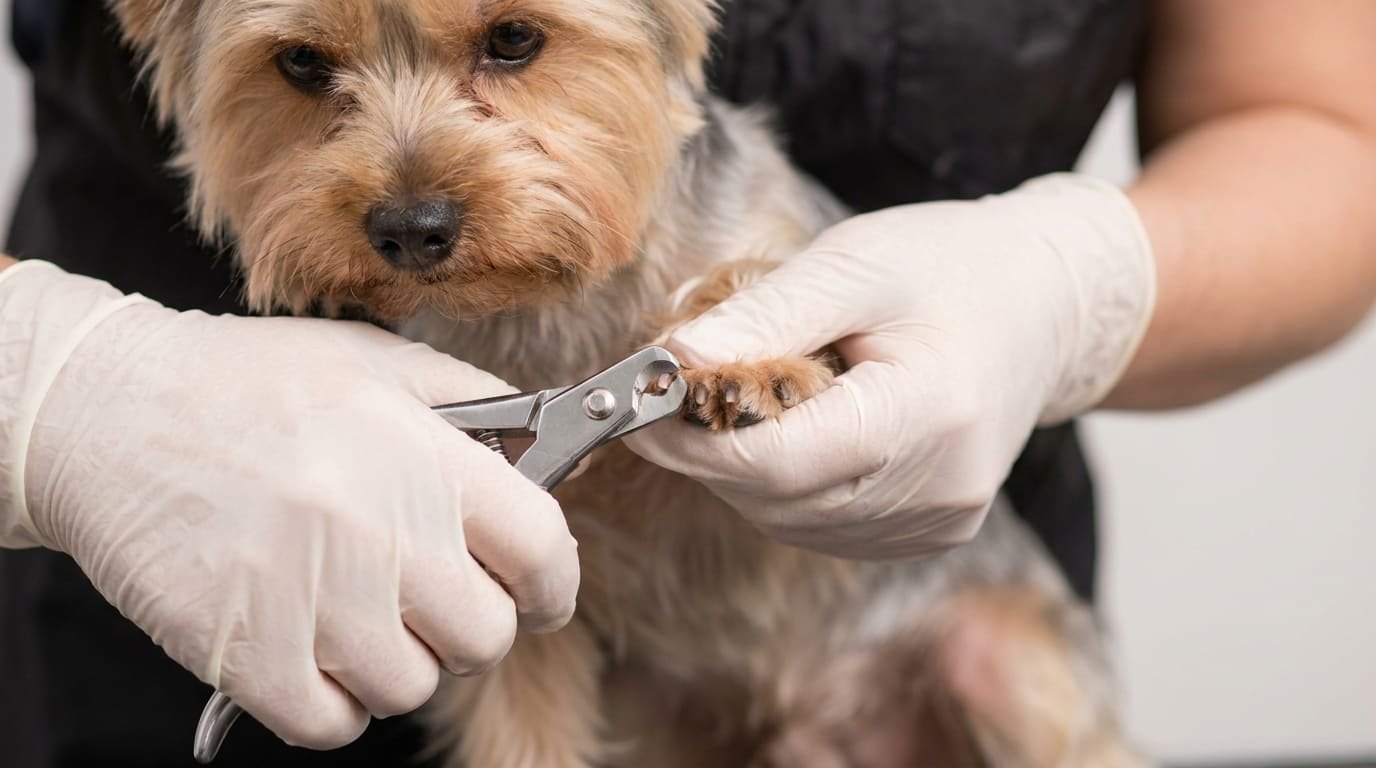
Why Nail Length Matters More Than Most Owners Realize
Overgrown nails do not just look untidy. They change how a dog stands and walks. When nails are long enough to make contact with the floor while the dog is standing normally, they push the toe backward and alter the angle of the foot. Over time, this changes the dog's gait, shifts weight distribution, and puts stress on joints that are not designed to absorb it that way. In older dogs, this can accelerate joint deterioration. In younger dogs, it can cause posture problems that develop gradually and are easy to miss.
The check is simple: if you can hear your dog's nails clicking on hard floors when they walk, the nails are too long.
How Often Dog Nails Should Be Trimmed
Most dogs need a nail trim every 4 to 6 weeks. This varies based on how much natural wear the nails get. A dog who walks daily on concrete or asphalt surfaces gets natural abrasion that slows nail growth. A dog who walks mostly on grass, carpet, or soft trails gets almost no natural wear and may need trimming every 3 to 4 weeks.
Nail Trim Frequency by Lifestyle
- Daily walks on pavement or concreteEvery 5–8 weeks
- Mostly grass, carpet, and soft surfacesEvery 3–4 weeks
- Senior dogs with reduced activityEvery 3–4 weeks
- Puppies (faster growing nails)Every 3–4 weeks
- Dogs with dewclaws (no ground contact)Same schedule, check separately
What Happens When Nails Are Left Too Long
As nails grow, the quick, the blood vessel and nerve running through the nail, grows with them. A nail that has been long for several months has a quick that has extended further down the nail than it should be. Cutting back to a healthy nail length requires cutting the nail shorter than the current quick position, which causes bleeding and pain.
This is why groomers sometimes cannot cut as short as an owner expects on a dog whose nails have been neglected. The only safe way to shorten a long quick is gradual trimming over multiple appointments, each one cutting just to the edge of the quick and waiting for it to recede before trimming again. Regular appointments at 4 to 6 week intervals prevent this problem entirely.
Clipping vs Grinding
Clippers cut the nail in one motion, which is fast and effective for most dogs. Grinders smooth the nail after clipping, removing the sharp edge that scratches floors and skin. Most professional nail trims use both: clip to length, then grind the edges smooth. Some groomers use grinding alone for dogs that find clippers stressful, since the gradual approach gives more control and produces a smoother result, though it takes longer.
Dewclaws, the small nails on the inside of the front legs and sometimes the back legs, do not make ground contact and therefore get no natural wear. They grow in a curve and, if left untrimmed, can curl around and grow back into the leg. Always include dewclaws in a nail trim even if the other nails look fine.
Why Some Dogs Fight Nail Trims
Nail trim resistance is common and almost always learned rather than inherent. A dog who was trimmed too short once, cut into the quick, and experienced the sharp pain and bleeding that follows has a reasonable reason to be wary. A dog who was restrained and rushed through a nail trim they found frightening has a reason to resist future attempts.
The solution is not a firmer grip. It is shorter, calmer sessions that end before the dog reaches their threshold. A dog who gets one nail trimmed, gets a treat, and is released has had a positive nail trim experience. Do that repeatedly and the resistance diminishes. At Foothills Dog Grooming, dogs with nail trim anxiety get more time and a slower pace, not more restraint.
Home Nail Trims Between Appointments
Trimming at home between professional appointments is completely reasonable for maintaining nail length, particularly for active dogs with fast-growing nails. What you need: sharp nail clippers designed for dogs, styptic powder in case you cut the quick, and a calm dog. Work in good light, trim small amounts at a time, and stop well before you think you are near the quick. A conservative home trim that keeps nails at a reasonable length between professional appointments is better than waiting until the nails are too long and trying to take them back in one session.
Quick Nail Trim Needed?
Call or stop by. Nail trims are one of the faster appointments to fit into a schedule and we will tell you honestly if same-day slots are available.
Call (865) 324-6678